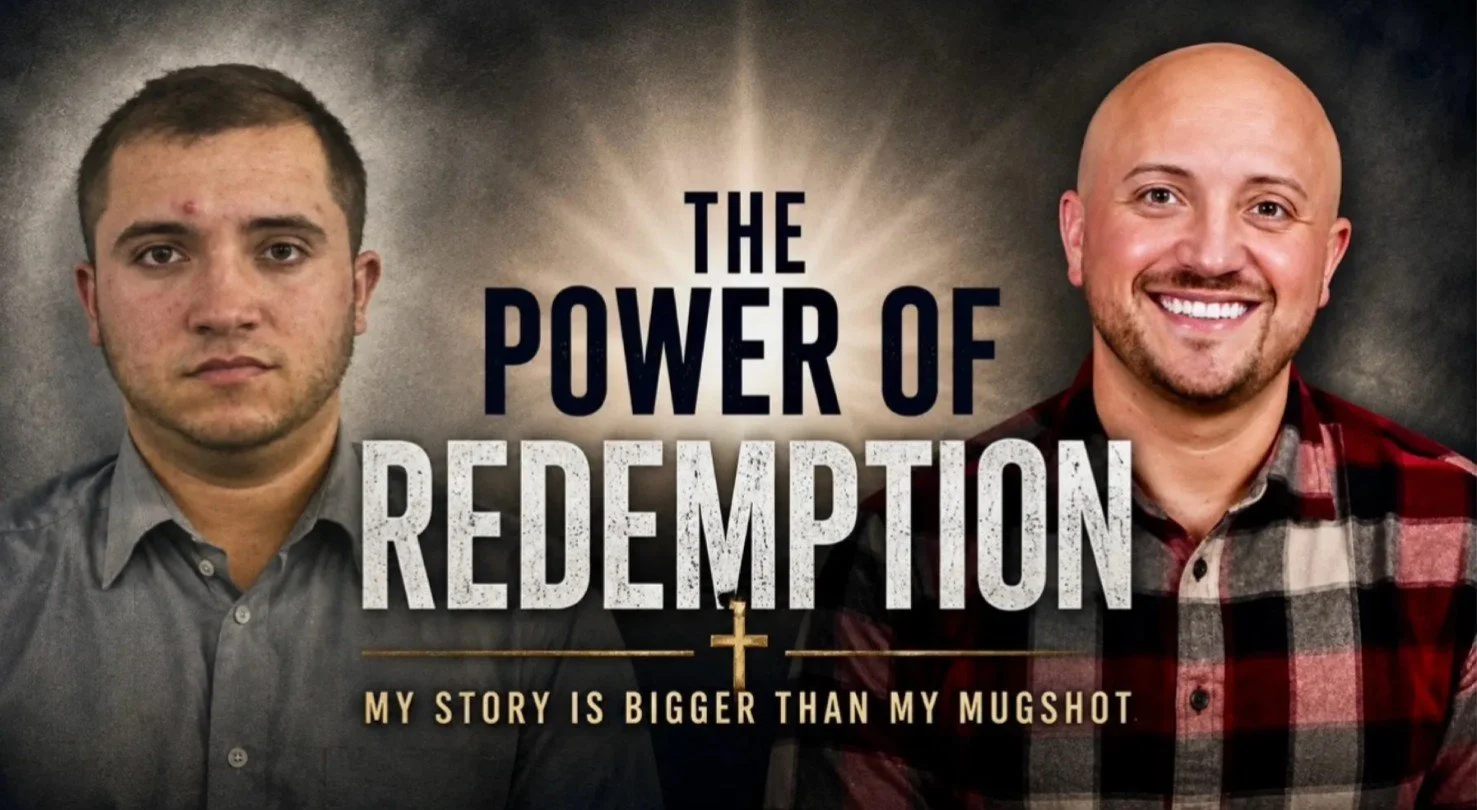
My Story Is Bigger Than My Mugshot
“A mugshot captured the worst day of my life. It did not capture the grace of God, the years of rehabilitation, or the man I would become.”
There is one photograph from my past that I will never be able to erase. It is my mugshot. I do not hide it because it represents a real chapter of my life. It reminds me of terrible decisions I made, the consequences that followed, and the people I hurt along the way. I accept responsibility for those choices. They cannot be excused, and I would never ask anyone to pretend they did not happen. At the same time, I refuse to believe that one photograph deserves to define the rest of my life.
For a long time, I believed it did. Shame has a way of convincing us that our worst moment is our permanent identity. It tells us that we will always be known by our failures and that redemption is for someone else. I lived with those thoughts for years. Even after my legal sentence ended, I wondered if I would ever be seen as anything more than the mistakes I made at twenty-two years old. Looking back now, I realize that I had accepted a lie. My past was part of my story, but it was never meant to become my identity.
What changed was not that my past disappeared. What changed was my relationship with Jesus Christ. God never asked me to pretend my past was not real. He did not remove every consequence overnight, and He certainly did not excuse my actions. Instead, He began changing me from the inside out. He taught me humility when I wanted pride. He taught me accountability when it would have been easier to make excuses. He taught me forgiveness, perseverance, and compassion for people carrying burdens that others cannot always see. Most importantly, He reminded me that my value had never been determined by my worst decision. My identity would no longer be found in my failures but in Him.
That transformation did not happen overnight. Real healing rarely does. I completed my sentence, completed probation, and spent years in counseling while continuing treatment for my mental health. I rebuilt relationships one conversation at a time. I worked to earn back trust instead of expecting it to be freely given. Every small step mattered because every step represented another opportunity to become the man God was calling me to be. Rehabilitation is not something that happens automatically when a sentence ends. It happens when people choose accountability, embrace growth, and allow God to shape their hearts through every season of life.
Today, when I look at my mugshot beside a current photograph, I do not see two different people. I see one life that has been transformed by the grace of God. The first picture tells the truth about who I was. The second tells the truth about what God has done since then. Both photographs are honest. Neither should be ignored. One reminds me where I have been. The other reminds me where God has brought me.
That is one of the most beautiful themes found throughout Scripture. God has always used imperfect people to accomplish His purposes. Moses committed murder before leading Israel out of Egypt. David committed adultery and arranged the death of Uriah before being remembered as a man after God’s own heart. Peter denied Jesus three times before becoming one of the leaders of the early Church. Paul persecuted Christians before becoming one of the greatest missionaries in history. Their failures were real. Their consequences were real. Yet God’s grace proved greater than their pasts. He did not erase their stories. He redeemed them.
That same grace is still available today. It was available to me, and it is available to anyone willing to place their faith in Jesus Christ. My testimony has never been that I turned my own life around. Left to myself, I do not know where I would be today. My testimony is that God met me in my brokenness, walked with me through every consequence, and continues to shape me into someone who looks more like Christ each day. Every opportunity I have today, whether advocating for mental health, justice reform, or voting rights, exists because God chose not to abandon me when I deserved condemnation. Instead, He offered grace and invited me into a life of purpose.
The world often defines people by the worst thing they have ever done. We save old headlines, preserve old photographs, and assume that yesterday’s mistakes are the truest version of someone’s identity. The Gospel tells a different story. Jesus never minimizes sin, but He also refuses to let sin have the final word. Through His death and resurrection, He offers forgiveness, restoration, and a completely new identity to those who trust Him. That promise is not reserved for a select few. It is the invitation Christ extends to every person.
If you are carrying shame today, believing you have gone too far or that your failures have permanently disqualified you, I hope my story encourages you. Your circumstances may be different from mine, but the grace of God is the same. Your worst decision does not have to become your permanent identity, and your greatest failure does not have to become your legacy. Jesus is still changing lives. He is still restoring families. He is still breaking chains. He is still writing new stories for people who thought their lives were over.
When people see these two photographs, I do not want them to admire me. I want them to see what God can do with a surrendered life. I want them to understand that redemption is not an abstract theological idea. It is something I have experienced personally. The real story is not about a man who somehow fixed himself. The real story is about a Savior who never stopped pursuing him. If my journey points you anywhere, I hope it points you to Jesus Christ. He is the Author of every good chapter that has been written since that mugshot was taken, and He continues to write the story today.
“Therefore, if anyone is in Christ, the new creation has come: The old has gone, the new is here!”
— 2 Corinthians 5:17 (NIV)