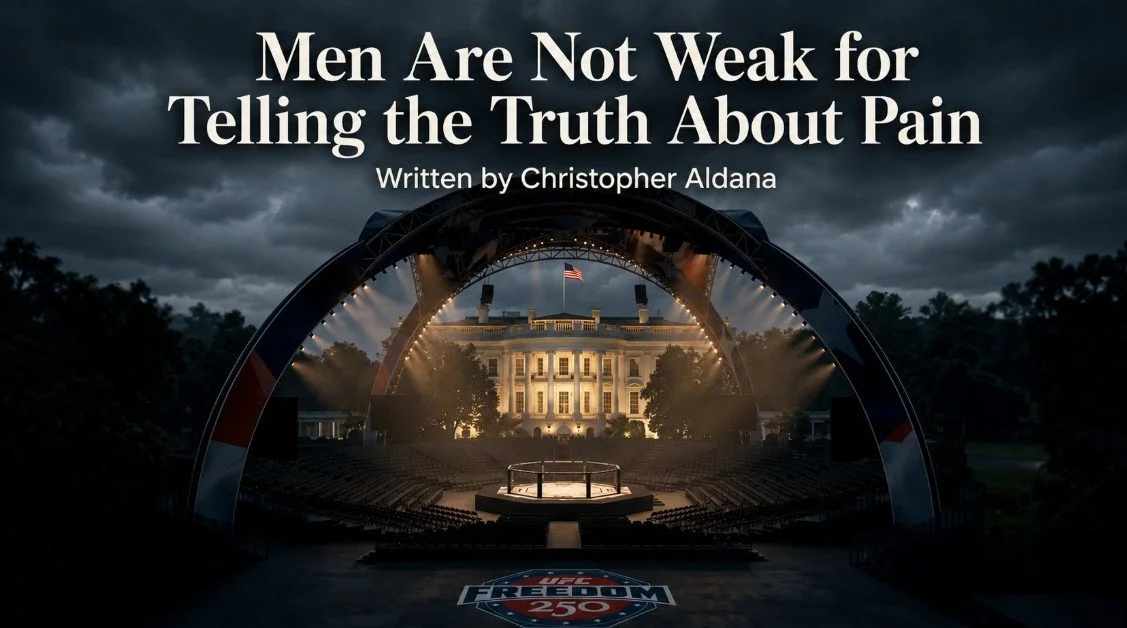
Dana White is wrong about men’s mental health, and this is exactly the kind of cultural moment that needs to be answered with clarity, not outrage for the sake of outrage. His words matter because his influence is real. He is not just a businessman. He has become a symbol of toughness, competition, discipline, masculine energy, and unapologetic strength in American culture.
That is why this conversation matters. When someone with that much influence treats emotional honesty like weakness, it does not remain one man’s opinion. It gives permission for other men to stay silent. It tells men that strength means hiding pain, burying fear, swallowing grief, and pretending nothing is wrong until something finally breaks.
I reject that.
I do not believe mental health should ever become an excuse to abandon responsibility. A man still has to answer for his actions. A man still has to protect his family, honor his commitments, control his behavior, provide where he can, repair what he damages, and face the consequences of his choices. Pain does not give anyone permission to become reckless, cruel, passive, abusive, dishonest, or irresponsible.
But the opposite lie is just as dangerous.
Denying pain does not make a man stronger. Pretending nothing is wrong does not make him more disciplined. Holding everything inside does not make him more masculine. In many cases, it makes him more isolated, more reactive, more ashamed, and more likely to collapse in ways that damage both himself and the people who love him.
The real issue is shame.
Too many men are not only struggling with anxiety, depression, trauma, addiction, anger, grief, burnout, or emotional exhaustion. They are struggling with the belief that they are not allowed to say it out loud. They fear that honesty will make them look weak. They fear people will respect them less. They fear admitting pain will make them less of a husband, less of a father, less of a leader, less of a provider, or less of a man.
So they bury it.
They laugh it off. They work more. They drink more. They lash out. They disappear emotionally. They perform confidence in public while quietly losing stability in private. They become experts at looking strong while their inner life is falling apart.
That is not strength. That is shame running the show.
A strong man is not a man who has no feelings. A strong man is a man honest enough to face what is happening inside him before it takes control of his life. He does not worship his emotions, but he does not deny them either. He learns how to name them, understand them, discipline them, and respond to them with maturity.
There is a difference between being ruled by your feelings and being honest about your feelings. One leads to chaos. The other can lead to wisdom.
When men are taught to hold everything in, the pain does not disappear. It finds another way out. It comes out as rage. It comes out as distance. It comes out as addiction. It comes out as pornography, gambling, substance abuse, reckless spending, workaholism, broken relationships, spiritual numbness, or a constant need to prove toughness.
Sometimes it comes out as silence so deep that the people closest to that man know something is wrong but no longer know how to reach him.
That is the tragedy of shame. It convinces a man that hiding will protect him while slowly cutting him off from the very people and support that could help him heal.
Men do not need a culture that teaches them to collapse into victimhood. They need a culture that teaches them to tell the truth without surrendering responsibility. They need fathers, pastors, coaches, leaders, friends, and public figures who can say, “You are not weak for admitting pain, but you are responsible for what you do with it.”
That is the balance we need.
Not excuses. Not denial. Not emotional performance. Not macho silence. Honest strength.
Dana White has built something powerful in the UFC. He understands discipline, sacrifice, pressure, competition, and toughness. But toughness without emotional honesty can become a trap. If masculinity only gives men permission to fight, work, win, provide, and endure, but never gives them permission to grieve, confess, ask for help, or tell the truth, then it is not protecting men. It is imprisoning them.
Men are not weak because they feel pain. Men become unstable when shame teaches them to hide it until it controls them.
The goal is not to make men softer in the shallow cultural sense. The goal is to make men healthier, steadier, more truthful, more accountable, and more capable of loving the people who depend on them.
A man should not be held hostage by shame.
He should be anchored by truth.